Sometimes, long after seeing a painting, I catch a glimpse of an artist's gaze in the middle of ordinary life. It doesn't happen often — but occasionally, the moment arrives quietly. Standing in a certain space, or pausing at a particular object, I find myself thinking: this must be what the artist saw. This must be what they felt.
After getting married, we moved to a small town on the border where Seoul meets Gyeonggi Province. It was a neighborhood close to the forest. The mountain behind our apartment kept the air clean, and at night the breeze carried the smell of a campsite into our home.
There was a botanical garden I visited often in those days. One evening near sunset, I was walking when I stopped in front of a small pond.
It had been one of those days when something heavy was sitting in my chest. It was connected, somehow, to the work I was doing then, or to the company I belonged to. I can no longer remember exactly what it was.
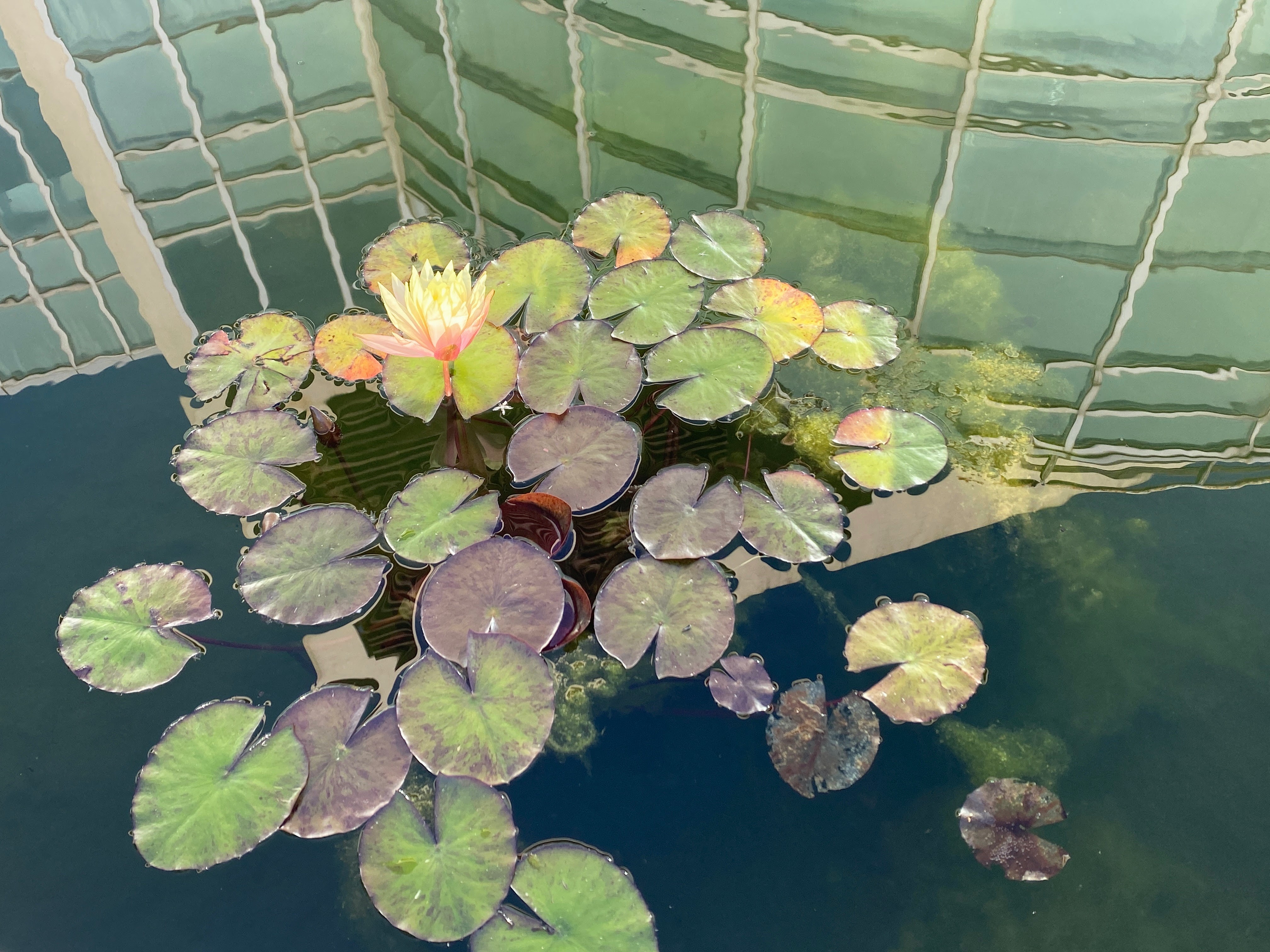
Water lilies floated on the still surface. A single pale pink bloom rested quietly among leaves of violet and green — not announcing itself, but simply existing in harmony with everything around it. The line where the lily met the water was hard to make out. Visible, then not. I thought: perhaps the boundaries we imagine don't mean very much out here on the water.
That was when Monet's water lily series came to mind. Perhaps what moved him was not the lily itself, but the atmosphere — the way it belonged so naturally to everything around it, its quiet, unassuming presence.
There are moments when ordinary life looks like a painting. In those moments, I feel I can sense something of the artist's way of seeing — their patience, their attention. It feels like a small gift.
That evening, I stood in front of those water lilies for a long time. With the thought: perhaps this is what Monet felt.